In almost every family tree, there are branches that feel heavy, fractured, or distant. We often carry silent burdens within our bloodlines: unspoken arguments between siblings, decades-old grudges between parents and children, or emotional estrangement that seems to pass silently from one generation to the next.
In our modern world, we are usually advised to handle these deep family wounds with quick advice, intellectual debates, or total cut-offs. We are told to set rigid boundaries and walk away, leaving the root of the pain untouched.
While personal safety and healthy boundaries are essential, simply severing ties often leaves a quiet ache in our spirits. We begin to realize that family conflict is rarely just about the immediate disagreement over money, estate inheritances, or differing life choices.
Beneath the surface lies a deeper, unseen current of intergenerational trauma. Unaddressed grief, survival fears, and ancestral pain frequently flow down through our bloodlines, manifesting in our daily lives as persistent relationship friction and emotional distance.
Across the African diaspora and within Yoruba cosmology, family was never understood as a fragile collection of isolated individuals. It was revered as a living, continuous organism spanning the physical realm, Isalu Aye, and the spiritual realm of the ancestors, Isalu Orun.
When disharmony arose within a family, our forebears did not rely solely on superficial conversations. They gathered around the sacred altar. Through ceremonial ministry, ancestral blessings, and sacred reconciliation rituals, they knew how to cool heated tempers, heal intergenerational wounds, and restore harmony to the home.
By returning to these timeless practices, we can transform long-standing family rifts into opportunities for profound spiritual alignment, forgiveness, and bloodline healing.
Phase One: The Remembering
To begin the journey of true family reconciliation, we must enter the first phase of our spiritual awakening, The Remembering. This is the conscious act of remembering who we are, where we come from, and how our ancestors maintained peace within their communities for thousands of years.
In Yoruba tradition, peace within a family unit is considered one of the highest spiritual achievements. A peaceful home, or Ile Alafia, creates the necessary environment for prosperity, health, and longevity to flourish. Our ancestors understood that human beings do not exist in a vacuum.
Your personal spiritual guidance system, your Ori, is intimately connected to the collective spirit of your bloodline, known as the Eggun. When there is unresolved strife between family members, the spiritual atmosphere becomes heavy and clouded, preventing the free flow of divine blessings (Ase).
Traditional Yoruba communities never viewed family reconciliation as a purely private or combative matter. They relied on structured, sacred ceremonies to bring relatives back into alignment:
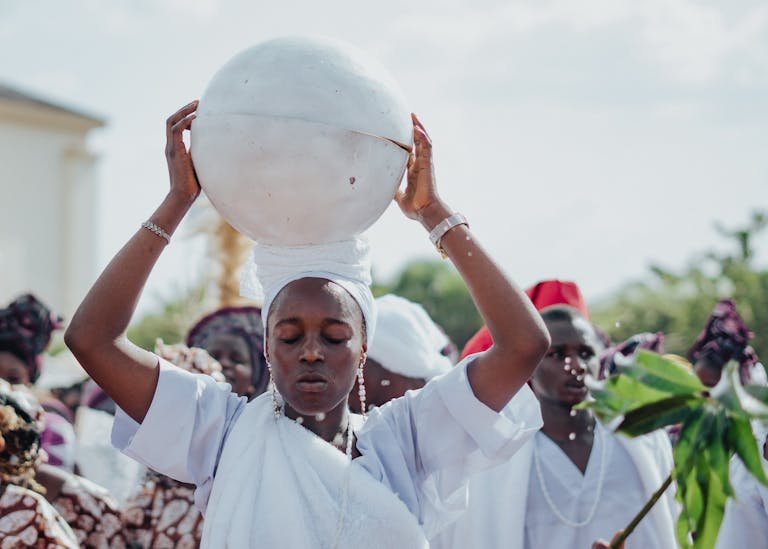
- Pouring Libation for Peace (Omi Tutu): Cool, clear water was poured upon the earth before any difficult family discussion began. Water carries the energy of peace, cooling, and spiritual clarity. By offering water to the ancestors first, the family acknowledged that the spirits of those who came before were present as witnesses, encouraging cooler heads and compassionate hearts.
- Invocation of the Elders’ Wisdom: Family elders served as sacred mediators, representing the wisdom of the lineage. Rather than taking sides, elders used sacred proverbs, traditional storytelling, and prayers to remind the conflicting parties of their shared origin, shared destiny, and duty to future generations.
- Sacred Sharing of Symbolic Elements: Conflicting relatives were invited to partake in symbolic rituals, such as sharing honey for sweetening relations, bitter kola for overcoming trials together, and water for washing away past offenses. These natural elements served as physical prayers, cementing the intention to forgive and rebuild.
When we remember these sacred traditions, our perspective on family conflict shifts. We stop viewing our relatives as enemies to be defeated. Instead, we see that the conflict itself is an invitation to heal a rift that may have started long before we were even born.
Phase Two: The Unveiling
As we reflect on the beauty of ancestral reconciliation, we must step courageously into the second phase of our journey, The Unveiling. In this phase, we pull back the veil to examine how historical trauma, colonization, and cultural disconnection severed our access to these sacred conflict-resolution practices.
During centuries of systemic displacement and forced assimilation, African spiritual infrastructure was systematically targeted. Sacred family altars were destroyed, traditional rites of passage were banned, and the spiritual authority of community elders was undermined.
Families were stripped of the sacred spaces where they once gathered to process collective grief, resolve interpersonal painful experiences, and speak words of blessing over one another.
Over generations, this forced loss of spiritual grounding left Black families navigating intense societal pressure and intergenerational trauma without their ancestral coping mechanisms. The unaddressed pain of our forebears was passed down, showing up in modern homes through recognizable patterns:
- Inherited Communication Barriers: Many families adopted survival habits of silence, emotional suppression, or explosive anger, making open and vulnerable conversation feel impossible.
- The Repetition of Family Cycles: Unhealed wounds between mothers and daughters, or fathers and sons, often repeat across generations until someone consciously decides to do the spiritual work of breaking the cycle.
- Isolation and Spiritual Homelessness: Cut off from the grounding influence of ancestral lineage, individuals often experience a deep sense of loneliness, struggling to trust others or build lasting, healthy relationships.
Unveiling these root causes allows us to extend grace to ourselves and our relatives. We begin to understand that the anger, distance, or toxicity we see in our family members is often the voice of unhealed intergenerational pain. Recognizing this truth gives us the clarity needed to stop the cycle of blame and step into the role of a bloodline healer.
Phase Three: The Reclaiming
Having remembered our sacred origins and unveiled the sources of our family disharmony, we step boldly into The Reclaiming. Reclaiming is about active, practical integration. It is the courageous work of bringing sacred ceremonies, ancestral blessings, and spiritual intention back into our modern family dynamics.
Reclaiming family reconciliation does not mean forcing yourself into unsafe situations or tolerating ongoing abuse. Rather, it begins as an internal spiritual stance. You can reclaim peace for your bloodline even if the other person is not yet ready, or even if they have already transitioned into the spirit world.
Here are practical, deeply grounded ways you can begin incorporating ceremonial ministry and sacred blessings into your family reconciliation journey:
1. Perform an Ancestral Reconciliation Prayer at Home
Create a clean, serene space in your home featuring a glass of clear water, a white candle, and photos of your ancestors. Sit in quiet meditation, light the candle, and pour a small amount of water onto a houseplant or into a vessel. Speak directly to the ancestors of your lineage. Express your desire for peace, ask them to soften the hearts of those involved in the conflict, and declare that the cycle of strife ends with you.
2. Practice the Ritual of Energetic Release and Cord-Cutting
When dealing with deep resentment toward a family member, write down all your unexpressed feelings, pain, and disappointment on a piece of paper. Once everything is written, sit quietly, breathe deeply, and speak a formal statement of release.
State clearly that while you honour your shared lineage, you are releasing the heavy emotional burden of that past pain. Safely burn or tear up the paper as a physical declaration that you are choosing peace over bitterness.
3. Convene a Sacred Family Circle
If all parties are open and willing, arrange a formal gathering dedicated solely to reconciliation. Move away from casual settings and treat the meeting as a sacred event. Begin by lighting a candle, offering a heartfelt prayer of gratitude for the family line, and setting clear ground rules rooted in mutual respect, active listening, and love. Allow each person to speak their truth without interruption, anchoring the conversation in the spirit of collective healing.
4. Speak Intentional Ancestral Blessings
Words hold immense creative power (Ase). Make it a daily habit to speak words of health, unity, clarity, and prosperity over your family members, even those with whom you are currently struggling.
Replacing internal criticism with spoken blessings changes the energetic frequency around your family line, opening unexpected doors for spontaneous healing and renewed connection.
Walking Forward in Your Divine Power
Family reconciliation is one of the most magnificent spiritual gifts you can offer to your lineage. When you choose to step forward as a peacemaker, anchored in ancestral wisdom and sacred ceremony, you do not just heal your current relationships. You send a wave of healing backward to comfort the ancestors who died in disharmony, and forward to clear the path for future generations.
You do not have to carry the heavy weight of family pain, anxiety, or generational estrangement in isolation. The negative patterns, misunderstandings, and historical burdens that have impacted your bloodline can be recognized, understood, and transformed into enduring sources of strength, unity, and grace.
Your journey toward spiritual renewal, ancestral alignment, and restoring peace within your family begins with a single, courageous step.
Book a 15-Minute Free Call with Me
Learn to recognize and transform the negative patterns that may be holding you back and use them for your good. Book Your Free 15-Minute Call Here