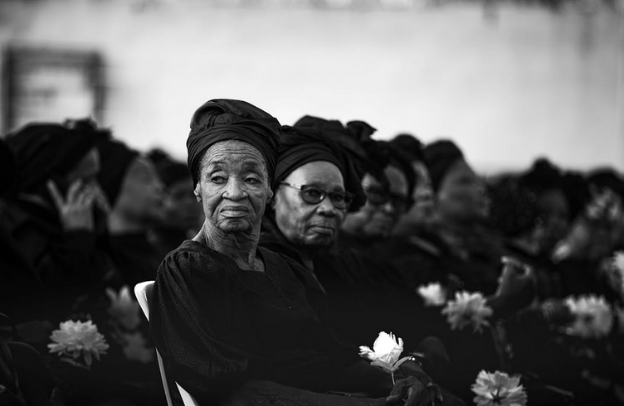
For many Black women, the act of caring for others is not simply a stage of life; it is a lifelong vocation. From early adulthood, and often even in childhood, many of us are quietly assigned the role of the reliable one. We become the financial safety net, the emotional anchor, and the logistical coordinator for parents, siblings, children, extended family, and community members. We step up because love demands it, because culture expects it, and because survival often leaves us with no other visible choice.
However, after decades of holding everyone else together, a quiet crisis often emerges. As the heavy demands of caretaking begin to shift or recede, many women look at their financial landscapes and feel an overwhelming wave of panic.
Decades of prioritizing the immediate survival of others can leave your own savings depleted, your financial future uncertain, and your inner world gripped by deep anxiety. You may find yourself stuck in a constant state of scarcity, constantly waiting for the next financial emergency to strike.
Transitioning out of prolonged caretaking requires more than just a new household budget. It requires a fundamental shift in your relationship with money, moving away from survival driven scarcity and stepping into sacred stewardship. It is time to redirect your nurturing energy inward, learning to manage your resources with peace, intention, and divine alignment.
The Heavy Price of Prolonged Caretaking
Caretaking is an act of profound love, but when it is practiced without boundaries over several decades, it extracts a heavy toll. In many African diasporic communities, the expectation to sacrifice oneself for the collective is deeply ingrained. We carry an unspoken script that tells us it is selfish to save for ourselves while someone else in the family is in need.
This dynamic often leads to what can be described as chronic financial hyper-vigilance. When you spend decades managing financial fires for other people, your nervous system adapts to a permanent state of emergency. You become conditioned to view money strictly as a tool for crisis management rather than a resource for personal stability, joy, and long term peace.
Consider how this survival mindset reveals itself in your everyday life:
- The constant fear of ruin: Even when you have funds set aside, you experience an underlying dread that a single unexpected event will wipe out everything you have built.
- Guilt around self-investment: Spending money on your own comfort, health, or future feels like a betrayal of those you have spent years supporting.
- Difficulty saying no: You continue to give financial support to others out of habit or fear of conflict, even when it directly compromises your own financial security.
- Financial avoidance: You feel so overwhelmed by the state of your personal finances that you avoid looking at bank balances, retirement accounts, or long-term plans altogether.
To heal this anxiety, we must address the root causes through a holistic and spiritual lens. We must journey through three vital stages of transformation: The Remembering, The Unveiling, and The Reclaiming.
Phase One: The Remembering
The journey out of caretaking anxiety begins with The Remembering. In this first phase, we trace the origins of our caretaking habits back through our lineage. We must acknowledge that our impulse to rescue and carry others did not start with us.
Many of our mothers, grandmothers, and ancestral matriarchs lived in environments where formal financial safety nets did not exist. For them, mutual aid and personal sacrifice were essential strategies to keep families fed and sheltered. They carried heavy loads because the world gave them no alternative.
When you engage in The Remembering, you honor the immense strength of the women who came before you while recognizing that their survival strategies do not have to be your permanent reality. Your ancestors sacrificed so that future generations could experience security, ease, and freedom, not so that you would remain trapped in an endless cycle of self-sacrifice.
To practice The Remembering as you transition away from decades of caretaking:
- Honor the history without carrying the debt: Sit quietly and speak to your lineage. Acknowledge the sacrifices made by the matriarchs before you, and state clearly that you are choosing to honor them through your peace and financial stability rather than through continued struggle.
- Release inherited responsibility: Recognize that you are not responsible for fixing systemic issues or undoing generations of family poverty single handedly. Your primary spiritual responsibility is to steward your own life well.
- Forgive yourself for past choices: Release any regret over money spent on others in the past. View those expenditures as acts of love completed in an earlier chapter of your life and grant yourself permission to write a different narrative today.
Phase Two: The Unveiling
Once you have honored your past, you enter The Unveiling. This phase invites you to look honestly at your current relationship with money and identify the unspoken agreements, fears, and boundary violations that keep you tied to financial anxiety.
In Yoruba cosmology, true prosperity requires balance, order, and clear boundaries. Money is a form of energy known as Aje, and like all energy, it requires healthy channels to flow effectively. When you allow your resources to be continually drained by others without boundary or limit, you disrupt your own spiritual and material alignment.
The Unveiling asks you to separate real financial facts from trauma driven fears. Caretaking anxiety often makes you feel as though you are completely destitute, even when you have options and resources available.
By bringing light into these hidden spaces, you can begin to distinguish between actual financial needs and the lingering emotional weight of past emergencies. Here is how the transition from scarcity to stewardship unfolds across different areas of your life:
| Area of Life | Scarcity Mindset (The Caretaker) | Sacred Stewardship (The Sovereign Woman) |
| Financial Focus | Reacting to immediate family emergencies and external demands | Building personal security, long term stability, and personal peace |
| Boundaries | Giving until depleted out of guilt or obligation | Offering support only from an abundance of overflow, with clear limits |
| Relationship to Money | Viewing money with anxiety as a temporary buffer against disaster | Viewing money as a sacred tool for freedom, health, and purpose |
| Personal Care | Treating rest and personal spending as unnecessary luxuries | Viewing self care and personal investment as essential stewardship |
Unveiling these truths gives you the clarity needed to stop living in constant reaction mode. It allows you to pause, catch your breath, and make deliberate choices about where your energy and resources go.
Phase Three: The Reclaiming
The final step of this transformative path is The Reclaiming. Having honored your ancestral story and unveiled your current patterns, you step into your full authority as a sovereign steward of your life and wealth.
Reclaiming your financial peace means shifting your identity from a reactive caretaker to an intentional steward. A steward does not hoard money out of fear, nor does she throw it away to keep the peace. Instead, a steward manages her resources with wisdom, dignity, and grace. She recognizes that her primary duty is to keep her own vessel filled so that she can walk in her true purpose.
In African diasporic traditions, true wealth encompasses far more than paper currency. It includes Alaafia (peace of mind and health) and Ilafe (contentment). When you reclaim your financial sovereignty, you create space for these divine qualities to anchor in your everyday life.
Here are practical, grounded steps to anchor the energy of stewardship:
- Establish the Vessel First: Before distributing funds to anyone else or responding to outside requests, pay yourself first. Direct a set percentage of your income into a dedicated account that serves as your personal foundation for peace and future stability.
- Practice Sacred Boundaries: When family members ask for financial assistance, practice giving yourself time before answering. Use clear phrases such as, “I need time to review my commitments before I can answer,” or “I am not in a position to assist with that right now, but I am holding you in prayer.”
- Create a Sanctuary of Abundance: Set aside a quiet space in your home that brings you a sense of calm. Keep your financial documents organized here, alongside items that remind you of nature, peace, and spiritual grounding. Make this a place where you review your finances with calm gratitude rather than dread.
- Invest in Your Own Flourishing: Allocate funds specifically for your personal growth, health, hobbies, and pleasure. Whether taking a class, prioritizing your physical wellness, or saving for travel, treat investments in your well being as non negotiable priorities.
Walking in Peace and Freedom
Transitioning from decades of caretaking into a life of personal financial stewardship requires immense courage. It calls on you to dismantle habits of self sacrifice that may have defined your entire adult life. Yet, on the other side of this transition lies the deep, restorative peace that you have earned many times over.
You are no longer required to burn yourself out to keep others warm. You are allowed to put down the weight of being everyone’s savior, and step into the sacred role of caring for your own soul, body, and future. As you soften into this new chapter, you honor your ancestors by embodying the peace, abundance, and freedom that they always wished for you.
Allow this season to be your time of restoration. Step out of the cycle of scarcity, lay down the burden of constant emergency, and claim the calm, abundant life that has always been your birthright.
A Sacred Invitation
If you are ready to break free from long standing patterns of financial anxiety, over-functioning, and emotional exhaustion, I invite you to step into a space of sacred transformation.
Book a 15-minute free Call with me
Learn to recognize and transform the negative patterns that may be holding you back and use them for your good. https://gloriaogunbadejo.com/15-minutes-call/